English
 Deutsch
 Français
 Italiano
 Español
 Türkçe
 Ελληνικά

 English
 Français
 Italiano
 Español
 Türkçe
 Ελληνικά
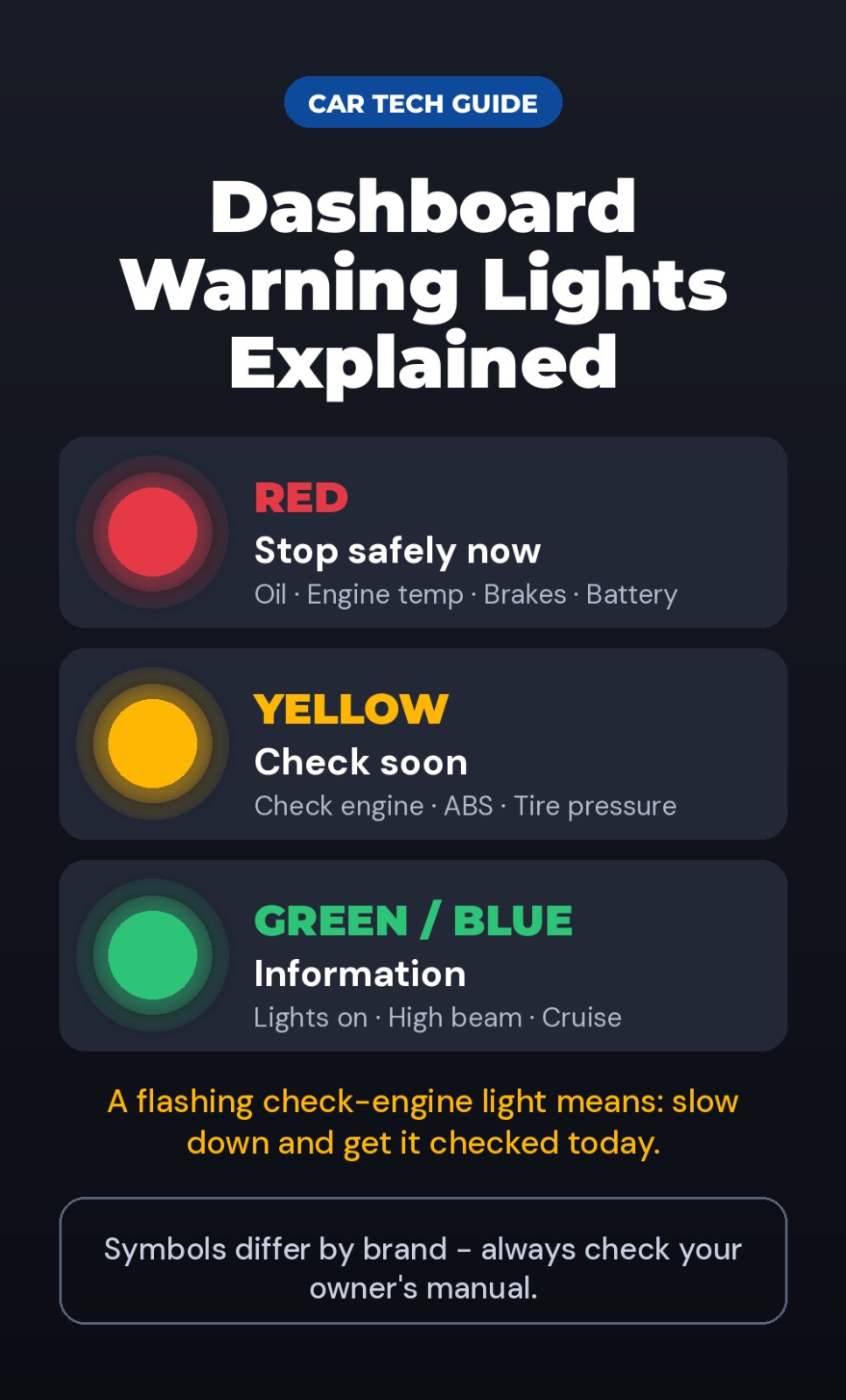
A new light on the dashboard can be stressful, but its color tells you most of what you need to know. Car makers use a traffic-light system: the closer to red, the more urgent the problem.
RED – Stop safely as soon as possible
- Oil pressure (oil can): The engine may not be getting enough oil. Stop and switch off the engine, because driving on can destroy it.
- Engine temperature (thermometer): The engine is overheating. Stop, let it cool, and never open a hot radiator cap.
- Brake warning: Check the handbrake first. If the light stays on, brake fluid may be low. Have it checked before driving further.
- Battery / charging: The battery is not being charged. You may only have a short time before the car stops.
YELLOW / AMBER – Check soon
- Check engine: A fault has been detected. If the light is steady, book a check. If it is flashing, it usually means a misfire: slow down and get it checked the same day.
- ABS: Normal brakes still work, but anti-lock braking may not.
- Tire pressure (TPMS): One or more tires are low. Check and inflate them. This is especially common when temperatures drop in winter.
GREEN / BLUE – Information only
- Headlights on, high beam (blue), cruise control active, eco mode and similar.
Symbols can differ between brands, so always check your owner's manual. When in doubt about a red light, stop safely and ask a mechanic.