English
 Deutsch
 Français
 Italiano
 Español
 Türkçe
 Ελληνικά

 English
 Français
 Italiano
 Español
 Türkçe
 Ελληνικά
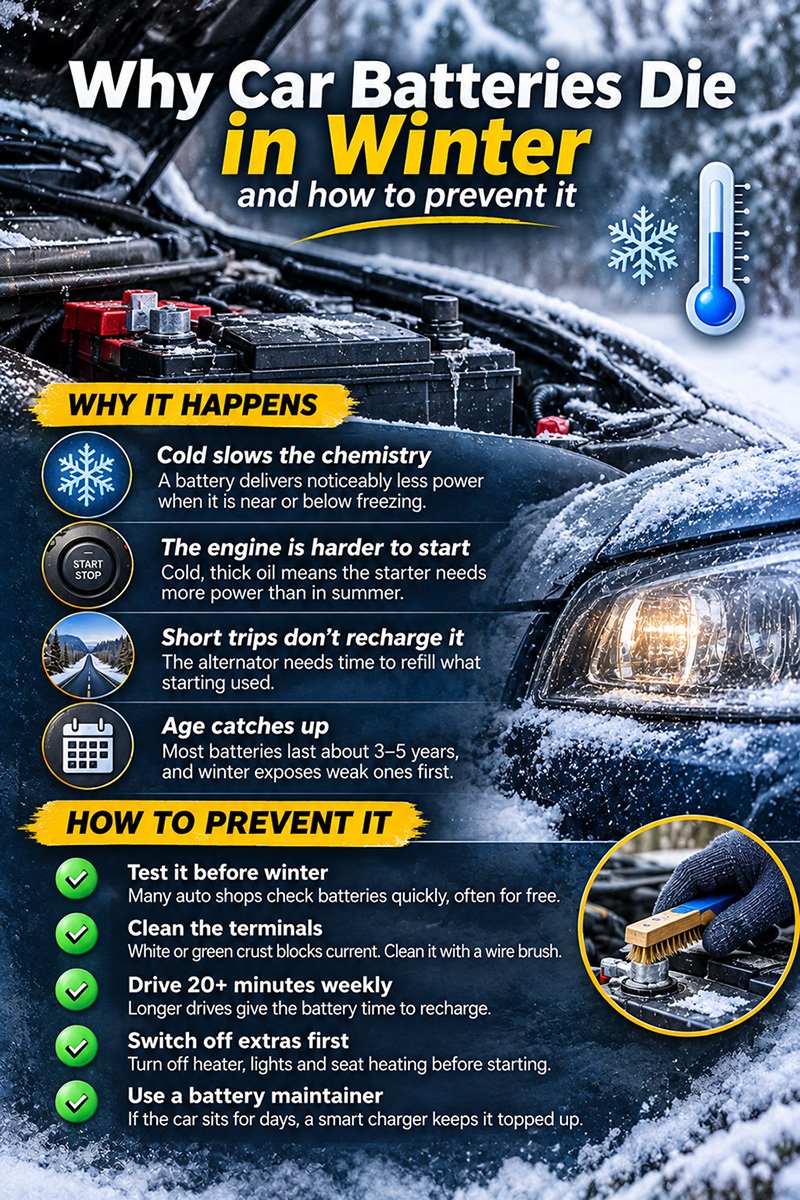
A car that started perfectly in autumn can suddenly refuse to start on the first frosty morning. Winter is the toughest season for car batteries, but a few simple habits can save you from being stranded.
Why it happens
- Cold slows the chemistry: The chemical reaction inside the battery runs slower in the cold, so it can deliver noticeably less power near or below freezing.
- The engine is harder to start: Engine oil thickens in the cold, so the starter motor needs more power just when the battery has less to give.
- Short trips don't recharge it: Starting uses a lot of energy. On short drives the alternator doesn't have time to put it back.
- Age catches up: Most batteries last about 3–5 years. A weak battery often fails first in winter.
How to prevent it
- Test it before winter: Many auto shops can check battery health quickly, often for free.
- Clean the terminals: White or green crust blocks the current. Clean it with a wire brush (wear gloves and eye protection).
- Drive 20+ minutes once a week: Longer drives give the battery time to recharge.
- Switch off extras before starting: Turn off the heater fan, lights, seat heating and rear window heating, then start the engine.
- Use a battery maintainer: If the car stays parked for days, a smart charger keeps the battery topped up safely.
Warning signs
- The engine cranks slowly or makes clicking sounds
- Headlights or dashboard lights look dim
- The battery warning light comes on while driving
If you notice these signs, have the battery tested soon. If you ever need a jump start, follow the steps in your owner's manual.